Paralysis Recovery
Ayurvedic Support for Paralysis Recovery in Visakhapatnam
In the classical texts Pakshaghatathe classical description of one-sided weakness
For individuals managing paralysis or reduced limb function following a neurological event, Ayurvedic therapy can be a supportive complementary practice alongside medical treatment. We work in coordination with the patient’s medical care team.
Does this sound like you?
People arrive describing it in different words, but it usually comes down to some of these.
- Reduced movement or strength in an arm, leg, or one side of the body
- Muscles that feel tight, shortened, or difficult to relax
- Limbs that feel cold, heavy, or unresponsive
- Stiffness that has increased since the initial event
- Skin and circulation concerns in a limb that moves very little
Usually families, not individuals. Someone comes in on behalf of a parent or a spouse, some months after a stroke, once hospital discharge has happened and the question becomes what to do now. We work slowly here, and always alongside the medical team rather than around it.
How Ayurveda approaches this
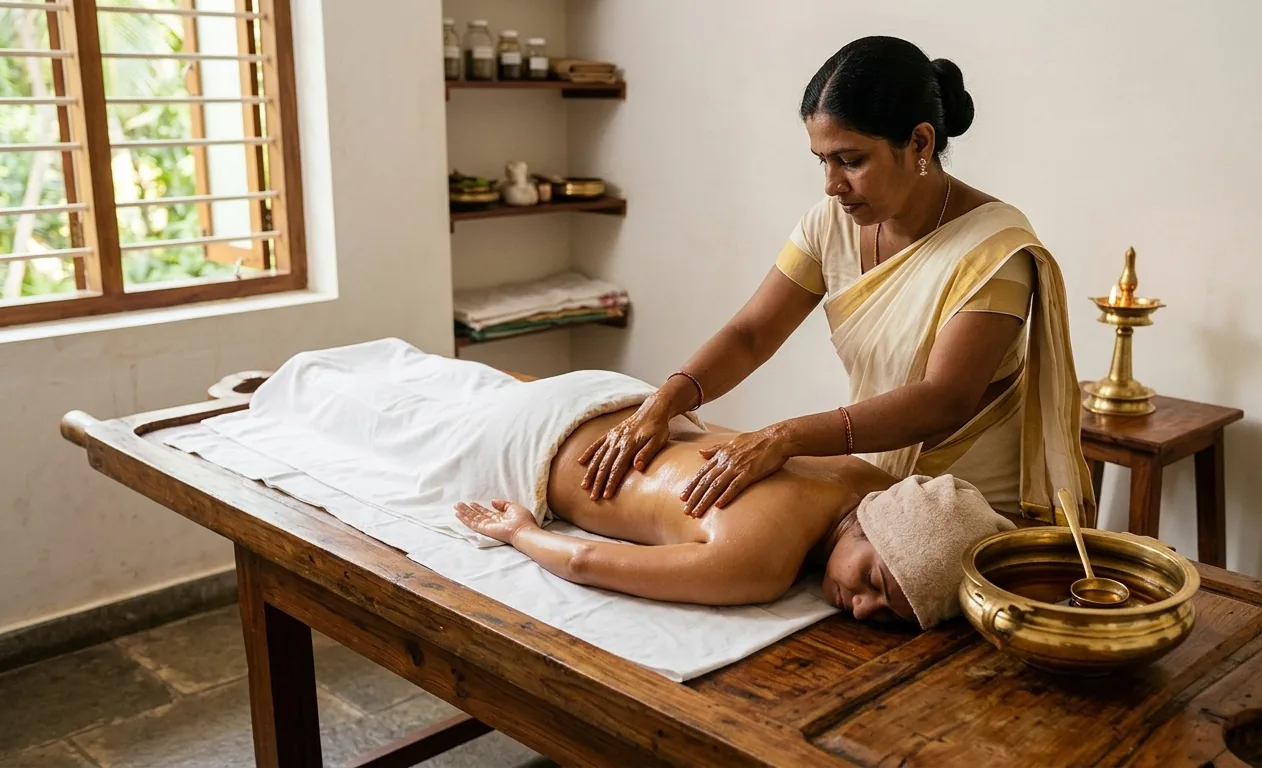
Traditional Kerala therapy uses warm Thailam application and gentle therapeutic touch to support circulation and muscle care in affected areas. This is a supportive wellness practice — not a replacement for medical treatment. Always consult your doctor before beginning any complementary therapy.
Traditional practice does not chase the symptom alone. The therapist also looks at the routine that produced it — how you sit, how you sleep, what you lift — because a condition that took years to build rarely resolves in a single visit.
Please read before booking. Paralysis recovery support is a complementary wellness practice offered alongside — never instead of — your medical treatment. Please consult your doctor or neurologist before beginning any complementary therapy, and continue every treatment they have prescribed. We are glad to coordinate with your medical care team, and we will decline to treat if we believe therapy is not appropriate at this stage of your recovery.
What to expect in a session
Nothing here is rushed and nothing is hidden from you. A first visit usually runs like this.
- A conversation firstThe therapist asks how long you have had the discomfort, what makes it worse, what you do all day, and what treatment you are already receiving. Bring any scans, X-rays, or prescriptions you have.
- PreparationYou change in a private treatment room. Herbal Thailams are warmed and selected for your condition. You will be told what is about to happen before it happens.
- The therapyWarm medicated Thailam and traditional Kerala bodywork focused on the affected limbs and surrounding muscle, at a gentle and unhurried pace. Pressure is set to what you can comfortably take, and you can ask the therapist to ease off at any point.
- Rest and aftercareA short rest afterwards, then simple guidance on food, warmth, and movement for the rest of the day — and an honest view on whether a course of sessions is worth it for you.
Typical session length is confirmed when you book, since it depends on the condition and how you respond to the first visit.
Looking after yourself afterwards
What you do in the hours after a session matters more than most people expect. Nothing here is complicated.
- Rest for a while before going anywhere. Sit quietly rather than walking straight out into traffic or a meeting.
- Keep warm and drink warm water. Cold drinks and cold showers work against the warmth the session has built up.
- Eat something light. A heavy meal straight afterwards tends to leave people sluggish.
- Leave the heavy work for tomorrow. Gentle movement is good; lifting, gym sessions and long drives are better postponed.
- Expect Thailam in your hair and on your skin. Plan the timing so you can go home and wash at your own pace rather than rushing.
- Mild tenderness the next day is normal. Sharp or increasing pain is not — message us and we will talk it through.
When to see a doctor first
We would rather lose a booking than treat something that needs a hospital. If any of the following applies to you, please get medical advice before you come to us.
Any new or sudden weakness, drooping of the face, difficulty speaking, or a fresh change in what the person can do is a medical emergency — call an ambulance. Never bring new neurological symptoms to a therapy centre.
Pricing
Starting price shared during your first consultation.We do not publish a price list, because the number of sessions depends entirely on your condition. Call us or message on WhatsApp to ask — you will get a straight answer.
Questions people ask about paralysis recovery
Will this help my relative walk again?
We cannot tell you that, and we will not pretend otherwise. Recovery after a neurological event depends on the injury itself, on time, and on medical and physiotherapy care. What traditional therapy may offer is support for circulation, muscle comfort and stiffness in the affected limbs. It is a supportive practice alongside that care, and nothing more than that.
Do you coordinate with our doctor or physiotherapist?
Yes, and we prefer it. Bring discharge summaries, the current medication list, and any instructions from the physiotherapist. If your doctor advises against therapy at this stage, we follow that.
Can therapy happen at home?
Please call and ask. It depends on the person’s mobility and on what the session needs, and it is not something we can answer honestly over a website. We would rather discuss the specific situation than give you a general yes or no.