Frozen Shoulder
Ayurvedic Treatment for Frozen Shoulder in Visakhapatnam
In the classical texts Apabahukaa Vata disorder of the Amsa sandhi, the shoulder joint
Frozen shoulder (adhesive capsulitis) causes stiffness and restricted movement in the shoulder joint, making lifting the arm or reaching behind difficult. It can be a slow and frustrating condition to manage.
Does this sound like you?
People arrive describing it in different words, but it usually comes down to some of these.
- Reaching behind you — a seatbelt, a back pocket — is painful or impossible
- You cannot lift the arm above shoulder height without pain
- Sleeping on that side wakes you up
- Dressing, especially sleeves, has become a daily problem
- It came on gradually, without any injury you can point to
Frozen shoulder is one of the most frustrating conditions we treat, because it is slow by nature and no amount of impatience speeds it up. It is more common in people with diabetes, and more common in women over forty. Most people who come to us have already had it for months.
How Ayurveda approaches this
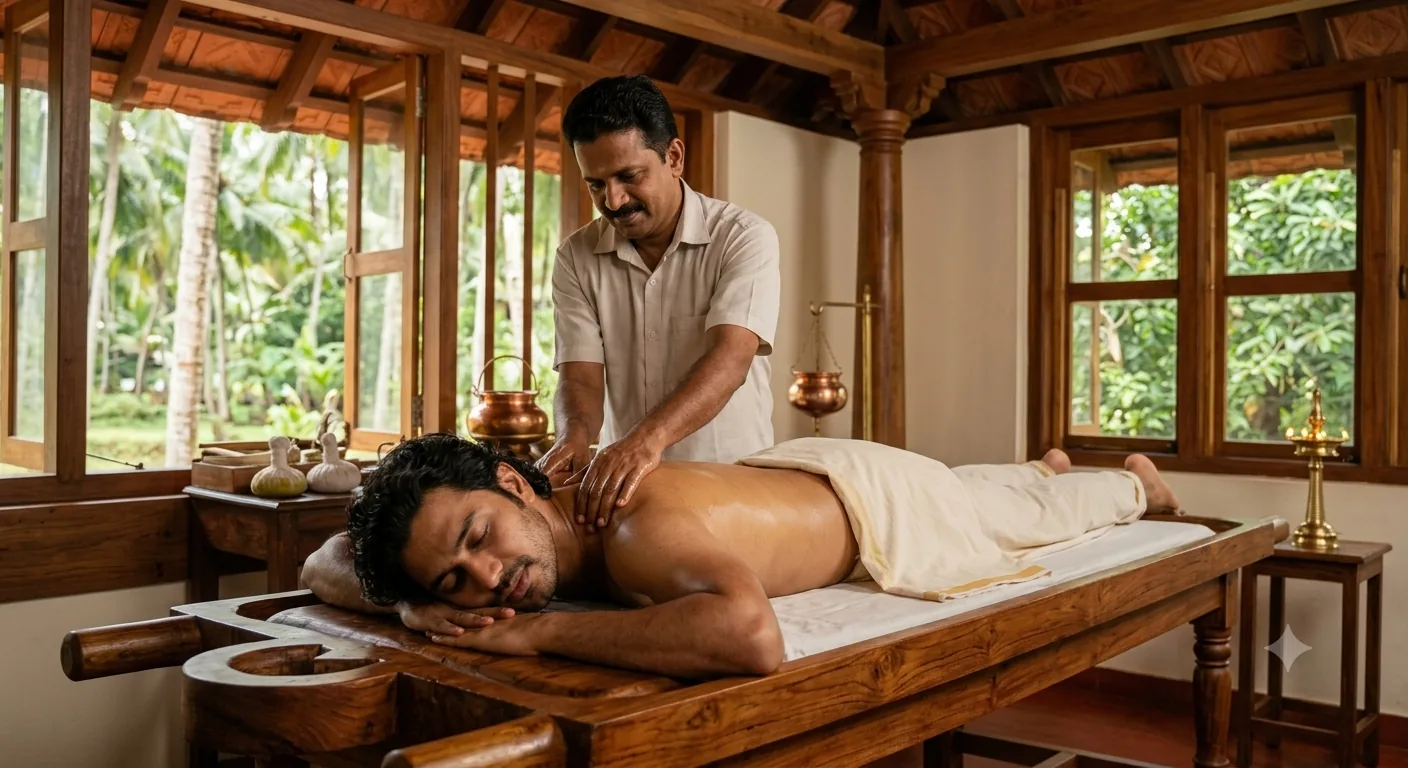
Kerala Ayurvedic therapy for frozen shoulder uses warm Thailam application and careful therapeutic massage around the shoulder joint and surrounding muscles, aimed at supporting gradual return of comfortable range of movement.
Traditional practice does not chase the symptom alone. The therapist also looks at the routine that produced it — how you sit, how you sleep, what you lift — because a condition that took years to build rarely resolves in a single visit.
What to expect in a session
Nothing here is rushed and nothing is hidden from you. A first visit usually runs like this.
- A conversation firstThe therapist asks how long you have had the discomfort, what makes it worse, what you do all day, and what treatment you are already receiving. Bring any scans, X-rays, or prescriptions you have.
- PreparationYou change in a private treatment room. Herbal Thailams are warmed and selected for your condition. You will be told what is about to happen before it happens.
- The therapyWarm medicated Thailam and traditional Kerala bodywork focused on the shoulder joint, upper arm, and the muscles across the shoulder blade. Pressure is set to what you can comfortably take, and you can ask the therapist to ease off at any point.
- Rest and aftercareA short rest afterwards, then simple guidance on food, warmth, and movement for the rest of the day — and an honest view on whether a course of sessions is worth it for you.
Typical session length is confirmed when you book, since it depends on the condition and how you respond to the first visit.
Looking after yourself afterwards
What you do in the hours after a session matters more than most people expect. Nothing here is complicated.
- Rest for a while before going anywhere. Sit quietly rather than walking straight out into traffic or a meeting.
- Keep warm and drink warm water. Cold drinks and cold showers work against the warmth the session has built up.
- Eat something light. A heavy meal straight afterwards tends to leave people sluggish.
- Leave the heavy work for tomorrow. Gentle movement is good; lifting, gym sessions and long drives are better postponed.
- Expect Thailam in your hair and on your skin. Plan the timing so you can go home and wash at your own pace rather than rushing.
- Mild tenderness the next day is normal. Sharp or increasing pain is not — message us and we will talk it through.
When to see a doctor first
We would rather lose a booking than treat something that needs a hospital. If any of the following applies to you, please get medical advice before you come to us.
A shoulder that stopped working straight after a fall or dislocation is a different problem and needs imaging first. If you have diabetes, mention it — it affects both how the shoulder behaves and how we plan the sessions.
Pricing
Starting price shared during your first consultation.We do not publish a price list, because the number of sessions depends entirely on your condition. Call us or message on WhatsApp to ask — you will get a straight answer.
Questions people ask about frozen shoulder
How long does frozen shoulder take?
Longer than anyone wants. It typically moves through painful, stiff and thawing stages, and the whole thing can run many months with or without treatment. Therapy aims to support comfort and range of movement along the way. We would rather tell you this now than sell you a quick answer that does not exist.
Should the arm be forced to move?
No. Aggressive forcing of a frozen shoulder usually inflames it and sets progress back. Our approach works around the joint and the surrounding muscles, and moves within the range you actually have rather than the range you would like.
Can I do exercises at home?
Yes, and with this condition home consistency matters more than session frequency. The therapist will show you a small number of gentle movements. Doing them daily, gently, does more than doing them hard twice a week.